

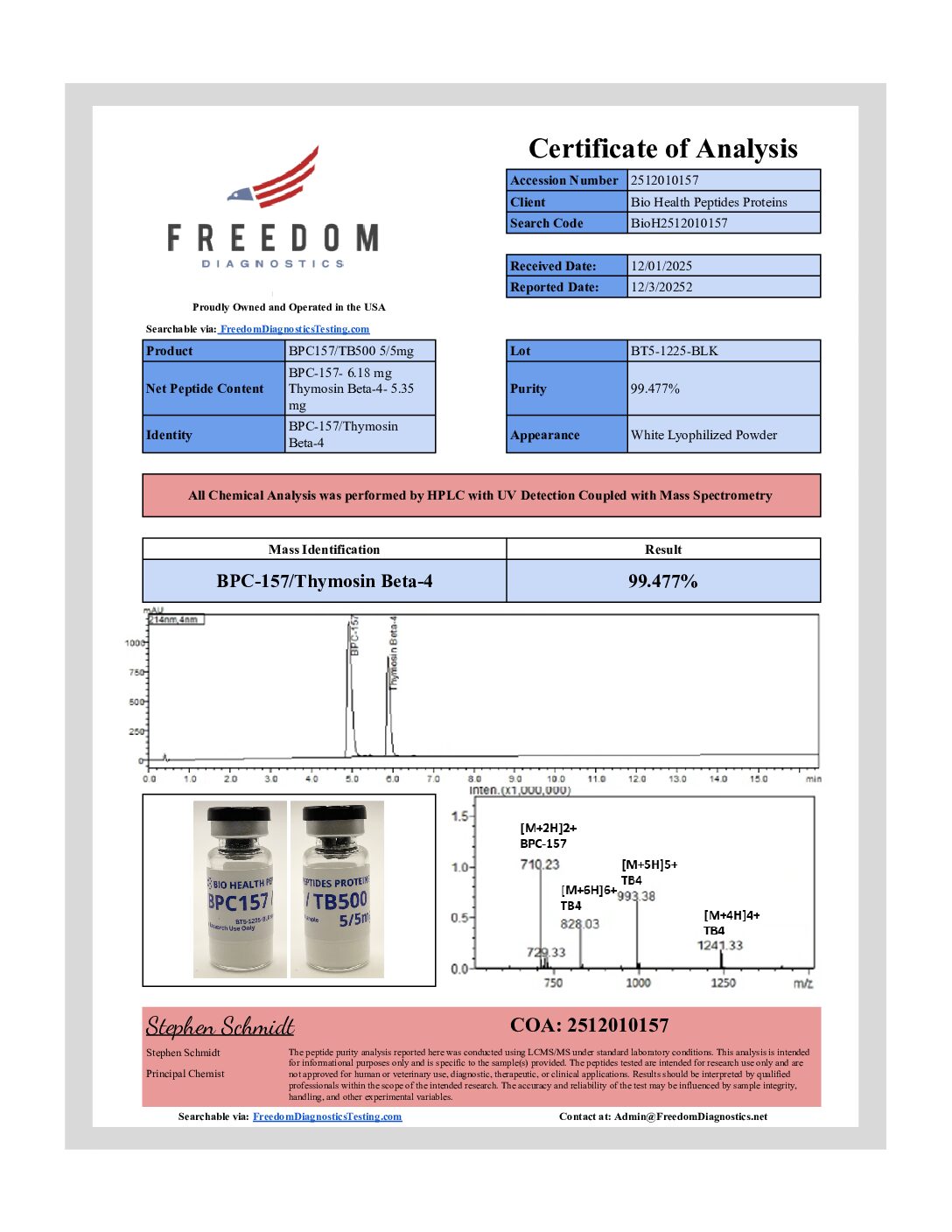


BPC-157 / TB-500
Catalog #: {{SKU}} | CAS: N/A
FOR RESEARCH USE ONLY
Not for human or veterinary use. Not for therapeutic or diagnostic applications.
Not for human or veterinary use. Not for therapeutic or diagnostic applications.
Product Identification
- Compound Name: BPC-157 / TB-500
- Synonyms: BPC-157 and TB-500 blend; Wolverine Stack
- Sequence: BPC-157: Gly-Glu-Pro-Pro-Pro-Gly-Lys-Pro-Ala-Asp-Asp-Ala-Gly-Leu-Val / TB-500: Ac-Lys-Lys-Leu-Lys-Thr-Glu-Thr-Gln
- Category: Synthetic Peptide Blend
Chemical & Physical Data
- Molecular Formula: Not applicable (multi-component blend)
- Molecular Weight: Not applicable (multi-component blend)
- Purity: ≥98.4% (HPLC); most batches test above 99%
- Appearance: White to off-white lyophilized powder
- Solubility: Soluble in sterile aqueous solutions for research preparation
Handling & Storage
- Storage (lyophilized): −20°C, protected from light and moisture
- Storage (reconstituted): Aliquot and maintain frozen conditions
- Avoid repeated freeze-thaw cycles
- Handle using appropriate laboratory safety protocols
Research Classification
This compound is supplied as a laboratory reference material for analytical and experimental applications.
No claims are made regarding biological activity in humans or animals.
All products are intended strictly for laboratory research conducted by qualified professionals.
The purchaser is responsible for ensuring compliance with all applicable laws and regulations.
The purchaser is responsible for ensuring compliance with all applicable laws and regulations.


